
No. In Florida, an open and obvious hazard usually does not automatically bar recovery. Instead, it shifts the case into comparative fault and duty analysis under section 768.81, Florida Statutes, and appellate courts increasingly let juries decide. If you were hurt on someone else’s property, preserve every piece of evidence you can and talk to a lawyer promptly.
TL;DR:
- An open and obvious hazard does not automatically bar recovery but shifts the case into a comparative fault analysis where the jury often determines liability.
- Florida courts distinguish between the duty to warn of visible hazards and the duty to maintain property in a reasonably safe condition, with many cases needing jury evaluation for the latter.
- Factors such as distraction, hidden dangers, building code violations, owner-invited use, and control disputes can override the open and obvious defense and create a jury question.
- Evidence like surveillance footage, maintenance logs, expert opinions, and photographs can effectively challenge the open and obvious defense and preserve a plaintiff’s claim.
- Preserving timely evidence within the critical first days after an incident significantly impacts the likelihood of overcoming the defense and securing a favorable trial outcome.
What the Open and Obvious Doctrine Means under Florida Law
The open and obvious doctrine asks whether a hazard was visible enough that a reasonable person would have noticed and avoided it. Florida courts treat this as an objective test: it does not matter whether you personally saw the danger, only whether someone paying ordinary attention would have.
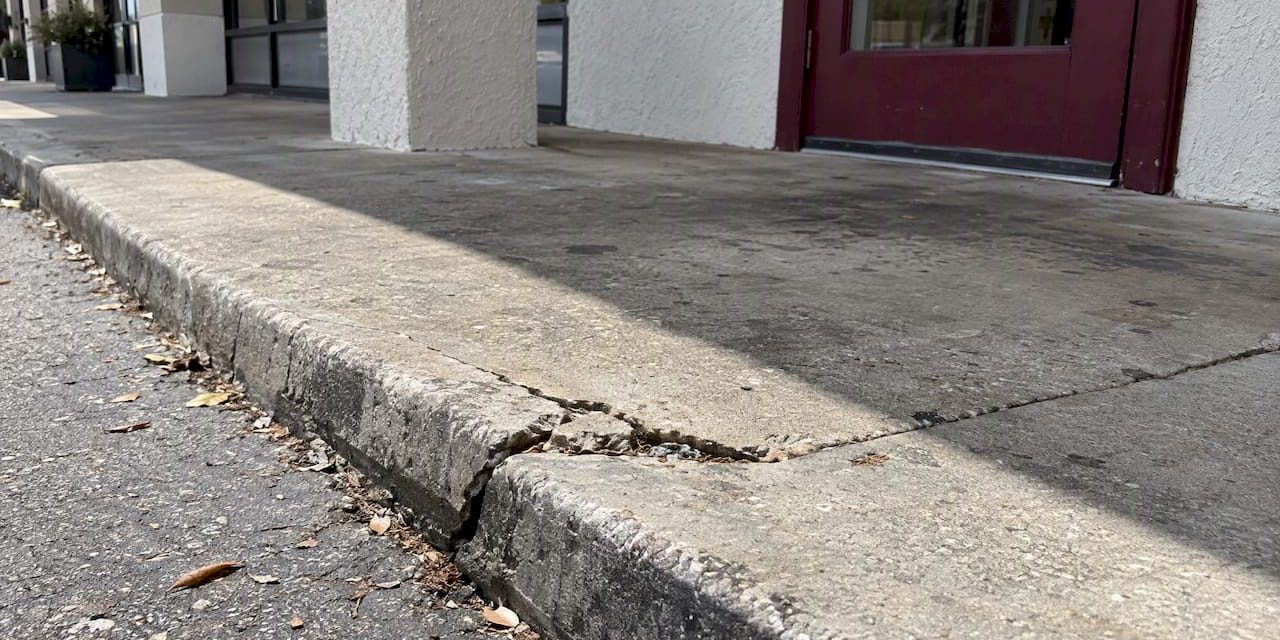
Here is where confusion sets in. Courts separate the object itself from the dangerous condition it creates. A curb is obvious. A curb with a cracked, uneven edge hidden by shadow is a different question entirely. Some hazards are so common and so harmless that courts treat them as non-actionable as a matter of law, a category that includes things like hot pool decks and beach sand. But that carve-out is narrow, and it does not automatically extend to every visible hazard a property owner wants to wave away.
How Florida Courts Apply the Doctrine: Duty to Warn vs. Duty to Maintain
Property owners in Florida owe two separate duties: a duty to warn of dangers and a duty to maintain the property in a reasonably safe condition. These get confused constantly, and that confusion is exactly where cases are won or lost.
An obvious hazard can excuse the duty to warn, since a warning would tell you nothing you could not already see. It does not excuse the duty to maintain. A property owner cannot point to a visible crack in the pavement and walk away from the responsibility to fix it. Florida’s appellate courts have made this distinction explicit: an open and obvious condition does not necessarily discharge a landowner’s duty to maintain the premises in a reasonably safe condition. When that duty remains live, summary judgment for the property owner is often inappropriate, because a jury, not a judge on paper, needs to decide whether the condition was reasonably safe in the first place.
Main Exceptions That Can Defeat an Open and Obvious Defense
Several recurring fact patterns push cases past the open and obvious defense and into a jury’s hands.
- Distraction or crowd conditions: a busy retail floor, a special event, or foot traffic that reasonably diverts attention from a hazard.
- Hidden danger inside an obvious object: algae on a dock that looks merely wet but is actually slick, or a puddle that hides a deeper defect.
- Building code or ADA violations: expert testimony tying a hazard to a code violation has been treated as prima facie evidence of negligence strong enough to defeat summary judgment.
- Owner-invited use: a well-worn footpath or a hazard sitting directly in the path customers are guided to walk.
- Disputed control or notice: situations involving shared responsibility, such as landlord and tenant arrangements, where it is unclear who actually controlled the area.
Any one of these can turn a seemingly obvious hazard into a genuine jury question.
Comparative Negligence and How Florida Apportions Damages
Florida runs on a comparative fault system under section 768.81, Florida Statutes. When a property owner raises the open and obvious defense, the fight usually is not about whether you recover anything: it is about how much fault gets assigned to you versus the property owner.
Say a jury finds your total damages and decides you were partially at fault for not watching where you were walking. Under Florida’s pure comparative negligence rule, you would recover your damages reduced by your percentage of fault, not zero. Obviousness becomes one factor in that percentage, not a wall that stops the claim outright. For a closer look at how that math plays out, our comparative negligence resource breaks down the statute in more depth, and our page on pure comparative negligence walks through additional examples.
How Plaintiffs Successfully Challenge the Open and Obvious Defense
Winning against this defense comes down to evidence, and the sooner that evidence is locked down, the better. Certain proof consistently moves a case from “obvious hazard, no claim” to “disputed fact, jury question.”
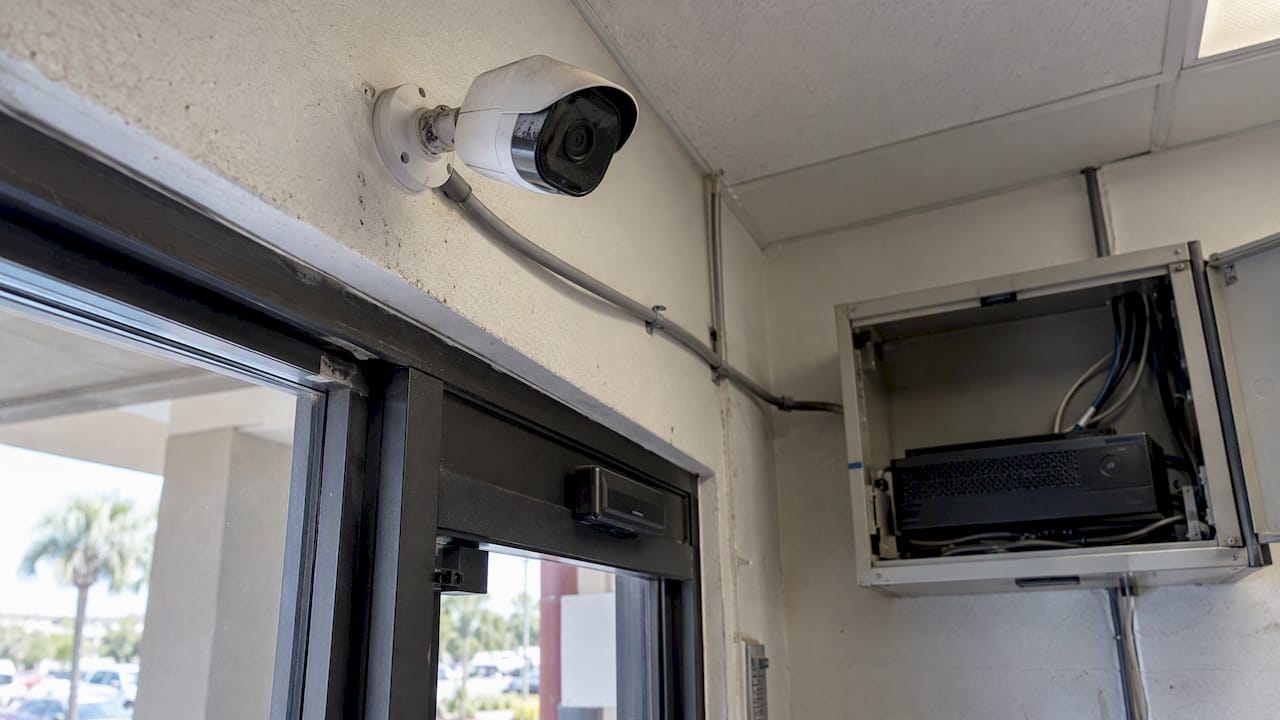
- Pull surveillance footage with timestamps before it gets overwritten or deleted.
- Request employee schedules and location logs to show who was near the hazard and when.
- Obtain maintenance records and any prior complaints about the same area.
- Secure the incident report and any written employee statements taken that day.
- Photograph the scene immediately, including angles that show lighting, foot traffic patterns, and the hazard’s size.
Building code and safety experts play a specific role here. An engineer who tests coefficient of friction or cites a Florida Building Code violation can turn a vague “it looked fine to me” defense into a documented negligence claim, the kind that survives summary judgment rather than getting dismissed before trial. Circumstantial proof also matters in spill cases: the size of the spill, how it got there, and how close an employee was standing can establish that the owner should have known, even without a timestamp proving exactly how long the spill sat there.
Pro Tip: Ask for the surveillance preservation in writing, immediately. Footage on a loop can overwrite itself in days, and once it is gone, your strongest evidence goes with it.
Practical Next Steps After a Florida Slip and Fall
What you do in the first 48 hours often decides what your claim looks like a year later.
- Get medical care right away, even if the injury seems minor, and keep every record.
- Photograph or film the hazard, the surrounding area, and your injuries before anything changes.
- Collect names and phone numbers from witnesses who saw what happened.
- Request a copy of the incident report and formally ask the property to preserve surveillance footage in writing.
- Save the clothing and shoes you were wearing, since they can become physical evidence later.
Representative Florida Cases and What They Show
Florida’s district courts of appeal have built a body of case law that shows exactly which facts move a case forward and which ones sink it.
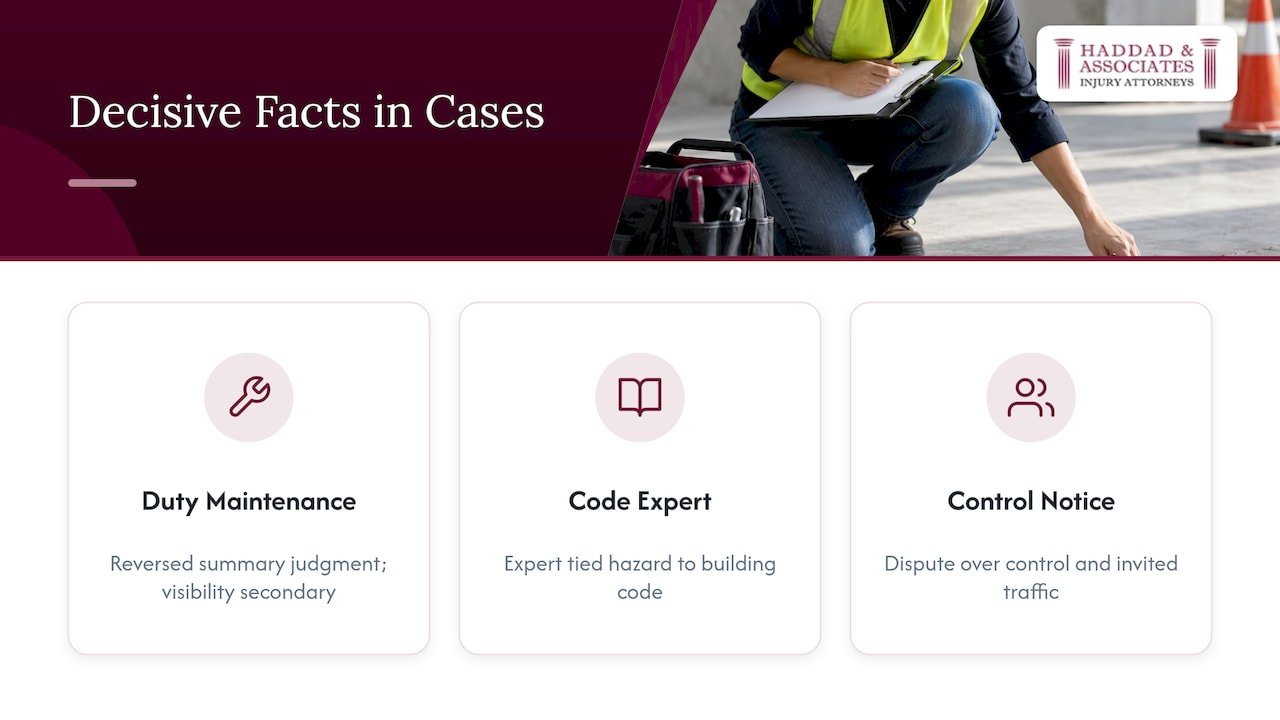
In one 2024 opinion, a court reversed summary judgment because the duty to maintain remained a live issue even though the hazard itself was arguably visible. The decisive fact was not whether the danger could be seen, but whether the property had been kept in reasonably safe condition.
Another 2024 opinion involved expert testimony on a building code violation. Once the plaintiff’s expert tied the hazard to a specific code section, the court treated that as evidence a jury needed to weigh, not something a judge could dismiss outright.
A separate case turned on disputes over control and notice: who actually managed the area where the fall happened, and whether the owner had invited the exact kind of foot traffic that led to the injury. In each case, the hazard’s visibility mattered less than what the property owner did, or failed to do, about it.
Why Preserving Evidence Changes Everything
Across the premises liability claims this firm has handled, the open and obvious defense tends to fail once real evidence enters the picture: timestamped footage, a maintenance log, an expert’s code citation. Obviousness on its own rarely ends a claim. What ends a claim is evidence that never got collected.
If you bring photos, witness contacts, and any incident report to a case review, a lawyer can quickly determine whether your facts create the kind of dispute a jury should decide.
— Haddad & Associates
Get a Free Case Review for Your Florida Premises Claim
Large firms often hand you off to a case manager and you never hear from the person actually making decisions on your file. Clients get direct access to attorneys from the first call, which matters most in premises cases where evidence has to be preserved within days, not weeks.
If you were hurt on someone else’s property and are not sure whether an “obvious hazard” argument will be used against you, a free case review can tell you where you stand at no cost, and representation is handled on a contingency-fee basis, so you owe nothing unless we recover for you.
- Bring any photos, witness names, and incident reports you already have.
- Ask us to send a preservation letter for surveillance footage before it gets overwritten.
- Visit our slip and fall attorney page to see how we handle premises claims from intake through resolution.
Call or request your free case review today and let us tell you honestly whether your claim has legs.
Where to Read the Underlying Law and Rulings
For readers who want the primary sources, Florida’s comparative fault rule is codified at section 768.81, and the appellate opinions cited above cover duty to maintain, code violations, and disputed control. For a broader secondary explanation of comparative fault generally, see Cornell’s Legal Information Institute, and for a different practitioner’s summary of Florida’s rule, see Oldham Law PLLC’s guide.
This article is general information, not a substitute for advice from a qualified lawyer. Consult a qualified legal professional about your own circumstances before acting on anything here.
FAQ
What is the hardest injury to prove in a premises case?
Soft tissue injuries and aggravated pre-existing conditions are often the hardest to prove because they lack the clear imaging evidence that fractures or surgical injuries provide. Documentation matters enormously here: prompt medical care, consistent treatment, and a clear record connecting the fall to the injury make these claims far stronger.
What is the 33-day rule in Florida?
Florida law does not have a generally recognized deadline for premises liability or personal injury claims, so that phrase likely refers to a specific insurance or medical billing provision rather than a statewide deadline. If you encountered this term in paperwork related to your claim, ask your attorney to confirm what it applies to in your specific situation.
What is the open and obvious doctrine?
The open and obvious doctrine holds that a property owner’s duty to warn about a hazard can be reduced when the hazard would be visible to a reasonable person. It does not automatically eliminate the separate duty to maintain the property safely, which is why many Florida cases still reach a jury despite an obvious hazard.
What is the 7 year property law in Florida?
There is no established property law specific to Florida premises liability or personal injury claims, so this term is not a recognized legal standard in this practice area. If you are thinking of a different area of property law, such as adverse possession or title records, that involves separate statutes and a qualified real estate attorney would be the right resource.